Mental Health
Sustainability
St Werburghs City Farm
June 20, 2026
At We Back Bristol, we believe the best stories about our city are the ones where a local business spots something extraordinary happening on its doorstep and decides to help it grow.
Where it all began
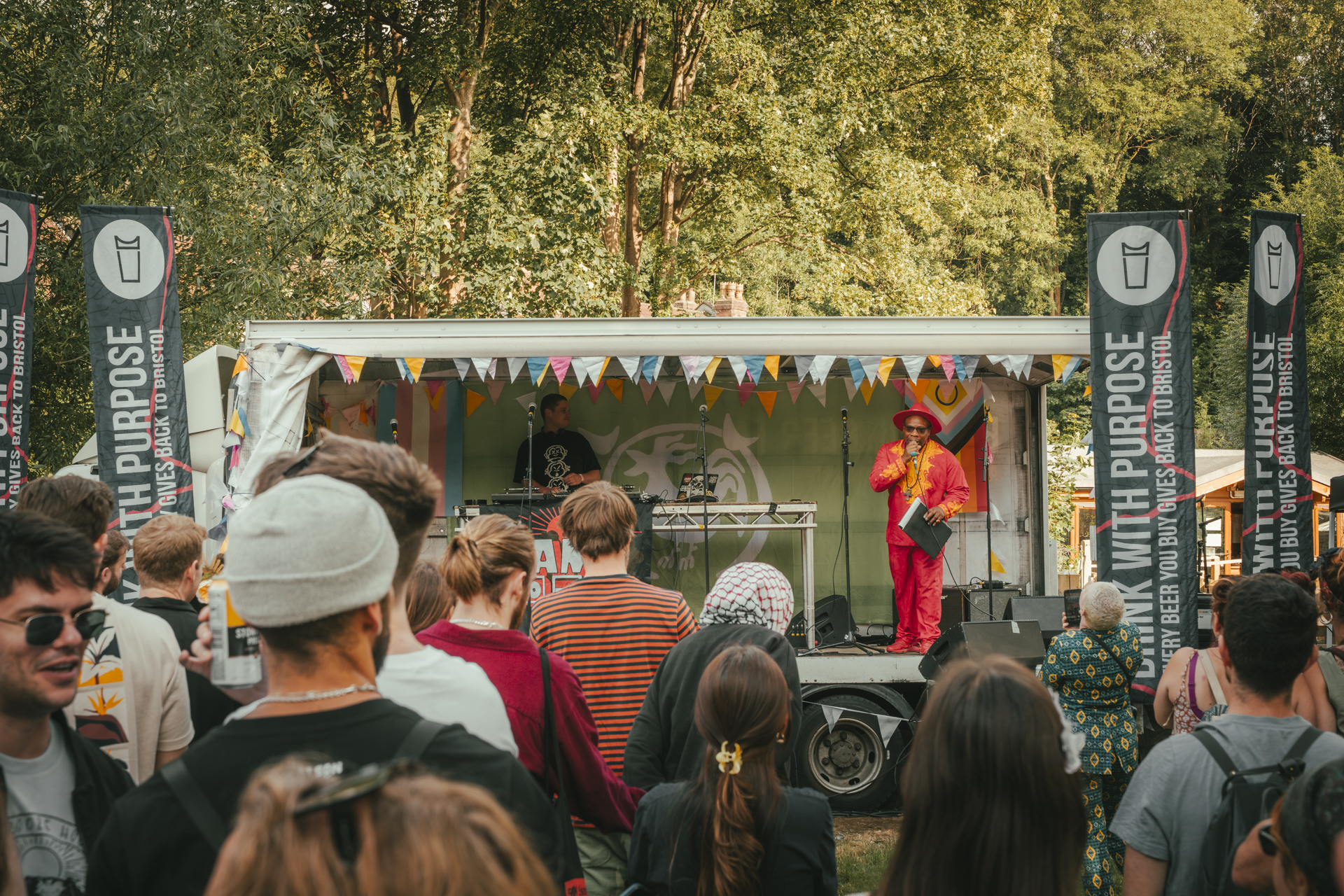
Back in 2019, St Werburghs City Farm hosted its Summer Fair and turned £4.5k of cost-price beer, donated by Bristol Beer Factory, into £27,000 for the Farm. For BBF’s MD Sam Burrows, watching that transformation happen was a lightbulb moment. It showed exactly how a community event, backed by the right kind of support, could raise serious funds for the charities holding up Bristol.
That moment became the inception point for BBF’s Brewed to Give initiative, launched in May 2023, through which the brewery pledges 2% of every sale to good causes across the city. Wherever possible, BBF gives beer, equipment and time rather than cash alone – so that other charities can do what St Werburghs did, and turn that support into four or five times its value.
Since launching, Brewed to Give has supported 15 separate events, raising in excess of £85,000 for St Werburghs City Farm alone. To put that in perspective, £85,000 is roughly equivalent to one full-time Youth Worker supporting 150 young people over two and half years, or 170 horticultural therapy sessions for 15 adults with care and support needs, or three years of insurance cover alongside 2,000 bottles of hand soap and 15,000 toilet rolls for the Farm’s free-to-access spaces.
It’s a brilliant example of what business support can achieve. But the real story here isn’t business generosity – it’s the work of the Farm itself.
The Farm at the centre of it all
Jenny Howard Coles, Director of St Werburghs City Farm told us why this work matters so much to the city.
“We’re pretty much doing the same range of things that we were doing when we set out in 1980 – albeit at a much larger scale – because although the area has changed, the broad sense of people needing to connect with nature and themselves, and for communities to come together in a shared space to improve their wellbeing hasn’t changed at all. Its only grown,” Jenny said.
Across 5 acres of green space plus 13 acres of allotments, the Farm offers animal care and therapeutic horticulture, volunteering for people facing mental ill-health or loneliness, alternative education, and outdoor play for neurodivergent children – alongside a café and working livestock farm, open seven days a week and free to visit. As Jenny put it, “That’s why it’s really important that we remain free to access.”
The scale of the challenge
The Farm works directly with close to 10,000 people a year, welcoming around 60,000 visitors, at an annual cost of around £800,000. Roughly half that income comes from grants – a landscape Jenny describes as increasingly unstable, with one funder recently receiving 300 applications for just four grants. The rest comes through contracts, donations, space hire and events like the Summer Fair.
Grants often come with restrictions, while the day-to-day reality is toilet roll, heating and admin costs – exactly why unrestricted funds from events, donations and business support matter so much.
Jenny was generous in her praise for Bristol Beer Factory’s support — but she was clear that there’s so much more that Bristol’s business community could do:
Build a long-term relationship, not a one-off gesture. A multi-year, unrestricted partnership — where a business and the Farm can co-create opportunities over time — is worth far more than a single top-ticket donation that may not actually meet the community’s needs.
Respect a charity’s time. Every hour a charity spends in a business meeting is an hour not spent delivering services or fundraising. Jenny noted that around 80% of current business interactions don’t result in a donation or a working partnership — a reminder that meaningful engagement matters more than well-intentioned meetings.
Choose the Farm, and offer real skills. Hire its spaces for team meetings, off-site events or staff parties. Book a team volunteering day. Or, if a business offers services like HR, IT, legal support, architecture, tree surgery, plumbing or electrical work, offer that expertise to the Farm for free, at the same standard given to paying clients.
Jenny also reflected on the pressure charities face to become more “enterprising” — and the risk that this can push organisations toward what’s profitable rather than what’s needed. As she put it, the Farm keeps people out of GP surgeries, psychiatric wards and off repeat medication, and probably keeps some people out of the criminal justice system too — yet none of that is properly costed or funded. The Farm isn’t trying to replace health services or schools. What it offers is a sense of belonging, purpose, skill and community — and that has to be funded properly, and delivered according to the Farm’s own values and standards. It can’t be done on a shoestring.
We Back Bristol
Stories like this are exactly why We Back Bristol was created. Bristol Beer Factory’s Brewed to Give initiative shows what’s possible when a business commits real, unrestricted support to a cause it believes in — and St Werburghs City Farm shows just how far that support can go when it lands in the hands of people who know their community best.
But one business alone can’t meet the scale of need across the city. That’s why We Back Bristol invites other Bristol-focused businesses to sign up and get involved — whether that means offering a multi-year unrestricted donation, giving time and professional expertise, or simply choosing to hire a space or book a service from a local charity or CIC like St Werburghs City Farm.
Businesses that join We Back Bristol become part of a growing network committed to raising up the charities and community organisations that hold this city together. Bristol Beer Factory has been fortunate to play its part in the Farm’s story. We Back Bristol is here to help many more businesses do the same.
Together, we can raise up our community.